How to Move a Wardrobe in the UK Without Damaging It
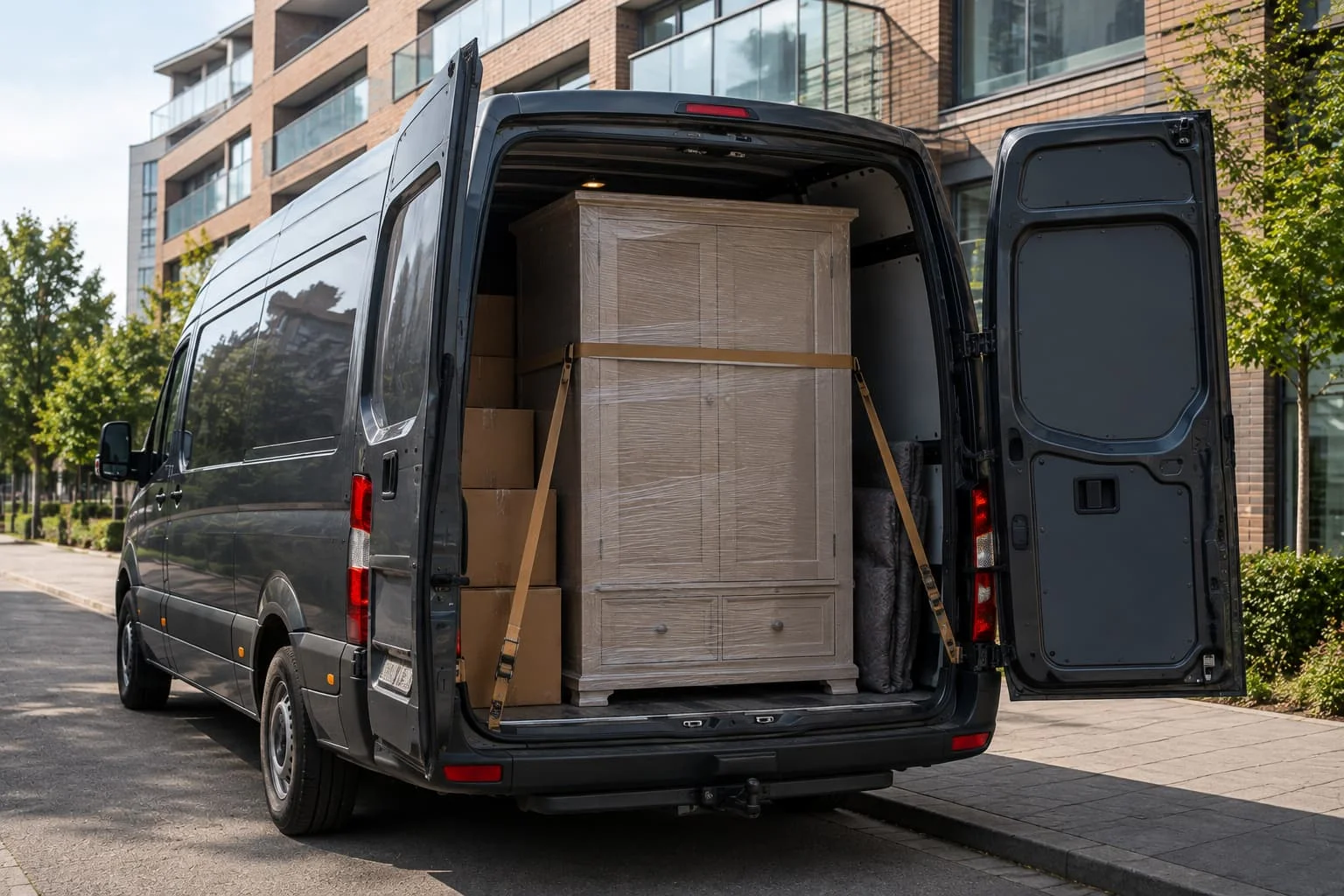
A wardrobe that catches on a stairwell turn, a door that swings loose mid-carry, or a corner that scrapes a hallway wall are the moments that turn a routine move into a repair bill. Getting a wardrobe from one room, or one house, to another without damage comes down to three decisions made in the right order. Measure the space first, choose the right handling method for the wardrobe you actually own, and know when the job needs two trained pairs of hands rather than one.
Before You Start: Preparing Your Wardrobe and Space
Getting a wardrobe out of the house without damage starts long before anyone lifts it. A few checks and a bit of prep work make every later step easier.
How to Measure Doorways and Stairs Before Moving Day
Measure the wardrobe's height, depth and diagonal against your narrowest doorway and stairwell turn before moving day, not after the crew has arrived. In older UK terraces, hallway doorways are often narrower than modern openings, with the standard UK internal door width sitting at 762mm and older properties sometimes as narrow as 686mm, well under the diagonal depth of a standard double wardrobe.
The tightest point on the route is rarely the front door. Stairwell turns, landings and internal doorframes usually cause more problems, so measure every doorway before moving furniture, at each pinch point, not just the entrance. Note the ceiling height on stairs too, since a wardrobe tipped onto its side needs headroom to clear a low landing. If the diagonal doesn't clear any of these points, you're looking at a tilt-and-turn approach or partial dismantling rather than a straight carry.
What to Remove From a Wardrobe Before Moving It
Empty the wardrobe completely before you attempt to move it, including shelves, drawers and the hanging rail if it lifts out. A loaded double wardrobe can carry an extra 20 to 30kg in clothing and shoes, which shifts the centre of gravity and turns a manageable lift into an unstable one.
Empty the wardrobe before moving and check for loose mirror panels or glass inserts, since these detach in transit if left unsecured. Remove wardrobe shelves before moving wherever the design allows, bag any fixings separately, and label which panel they belong to so nothing goes missing before reassembly.
Tools and Materials You'll Need
A short list of materials prevents most of the damage that happens during a DIY wardrobe move.
- Moving blankets. Wrap flat sides and doors to stop scuffs against frames and walls.
- Corner protectors. Cushion the four most vulnerable edges on a wooden or veneered unit.
- Ratchet straps. Hold the wardrobe upright and secure once it's loaded into a van.
- A sack truck or furniture dolly. Take the weight off your back on flat, level stretches.
- Screwdriver and Allen key set. Cover both flat-pack cam locks and older screwed joints.
With the route measured and the wardrobe stripped down to its shell, getting the basics right before you move a wardrobe saves far more time than fixing damage afterward. The next decision is whether it needs to come apart at all.
How to Move a Wardrobe Without Dismantling It
Whether a wardrobe needs to come apart or not depends entirely on what's between it and the van. Here's how to make that call.
When You Can Move a Wardrobe Fully Assembled
A wardrobe can travel fully assembled whenever its diagonal measurement clears every doorway and stairwell turn on the route. Many freestanding wardrobes under 1.2m wide fit through a standard doorway using a tilt and turn method, where the unit is angled onto one edge and rotated through the gap rather than carried flat.
This works best with lighter, single-door units and back panels that are screwed rather than stapled, since stapled backboards flex and can separate under the pressure of transporting a wardrobe fully assembled. How to move a wardrobe without dismantling it safely comes down to controlling the angle through the tightest point, not forcing it straight through.
When Dismantling Is the Safer Option
Dismantling is the safer option whenever the wardrobe's diagonal exceeds the narrowest point on the route or the unit weighs more than two people can control on a turn. When to disassemble furniture for moving becomes obvious at stairwell landings under 2m square, where a tilted wardrobe has nowhere to pivot. Removing doors first cuts both weight and width in one step, and taking off a cornice or top box shortens the unit enough to clear low ceilings on a staircase. Flat-pack wardrobe moving tips apply directly here, since flat-pack construction is designed to come apart along the same joints it was built on.
Solid Wood vs. Flat-Pack: Different Handling Rules
Solid wood and flat-pack wardrobes fail in different ways under stress, so they need different handling rules on moving day.
| Wardrobe Type | Main Risk in Transit | Handling Rule |
|---|---|---|
| Solid wood | Joint separation at corners and hinges | Keep upright, avoid dragging, support full length when tilted |
| Veneered / MFC | Chipped or lifted veneer at edges | Corner protectors on every edge, no direct contact with door frames |
| MDF / chipboard | Crumbling at screw points, swelling from damp | Avoid repeated dismantling and rebuilding, keep dry during transit |
| Mirrored | Cracked glass from flex or impact | Remove mirror panel separately, transport flat and padded |
Solid wardrobe vs flat-pack transport decisions set the plan. The next stage is putting that plan into practice safely, which starts with how you and a second pair of hands actually lift and carry the unit.
Safe Lifting, Carrying, and Navigating Tight Spaces
Once the wardrobe is prepped and the method is decided, the physical part of the move begins. Technique matters as much as strength here.
Getting a Wardrobe Up or Down Stairs Safely
Wardrobes go up or down stairs safely when one person leads from below to take the weight and the other steadies from above to control direction. Moving furniture up stairs safely means pausing at every landing to reset grip and check the angle rather than pushing through in one continuous motion.
A wardrobe stuck on stairs is almost always a sign the unit was carried flat instead of tilted onto its narrower edge, the profile most staircases are actually built to clear. On a tight staircase furniture removal job, lowering the unit feet first and leading with the base reduces the risk of it tipping forward onto the person below.
Angling Furniture Through Narrow Doorways and Corners
Angling a wardrobe through a narrow doorway comes down to finding the widest usable diagonal and rotating around it in stages.
- Lead with the top corner. Tilt the wardrobe so the highest point enters the gap first.
- Pivot in small steps. Rotate a few degrees at a time rather than forcing a single turn.
- Protect the frame. Hold a blanket against the doorframe as a buffer while the unit passes through.
- Communicate constantly. One person calls the angle while the other adjusts grip.
The technique for angling furniture through a doorway matters just as much in a Victorian hallway as it does when moving furniture in a flat, with the tighter, boxier layouts common in newer builds. Getting the wardrobe through the building safely is only half the job. What happens to its surface during that journey depends on how well it's wrapped.
Protecting Your Wardrobe From Scratches, Dents, and Breaks
A wardrobe that survives the doorway and the stairs can still pick up damage from poor wrapping or a badly loaded van.
Wrapping Doors, Panels, and Edges Correctly
Wrapping a wardrobe properly means covering flat surfaces first and reinforcing the four corners, which take almost all the impact during a carry.
- Moving blankets on flat panels. Secure with tape that doesn't touch the wood finish directly.
- Corner protectors on every edge. These absorb knocks against doorframes and stair rails.
- Painter's tape on doors. Keeps them shut without leaving adhesive residue on the finish.
- Stretch wrap as a final layer. Holds blankets in place without pressing plastic directly onto the surface.
Wrap wardrobe doors for moving this way, and preventing scratches when moving furniture becomes a matter of consistent coverage rather than luck. Using corner protectors for furniture transport is the single change that prevents most of the visible damage reported after a DIY move.
Moving a Mirrored Wardrobe Without Cracking the Glass
A mirrored wardrobe needs the glass panel removed or independently braced before the rest of the unit moves. How to move a mirrored wardrobe without cracking it starts with taping an X across the glass to hold any fragments together if an impact does occur.
Secure wardrobe mirror for transport by padding both faces and carrying it flat rather than upright, since vertical transport puts flex pressure across the full pane. Transporting glass furniture safely also means keeping the mirror separate from other items in a van, where shifting loads are the most common cause of cracked panels.
Loading and Securing a Wardrobe in a Van
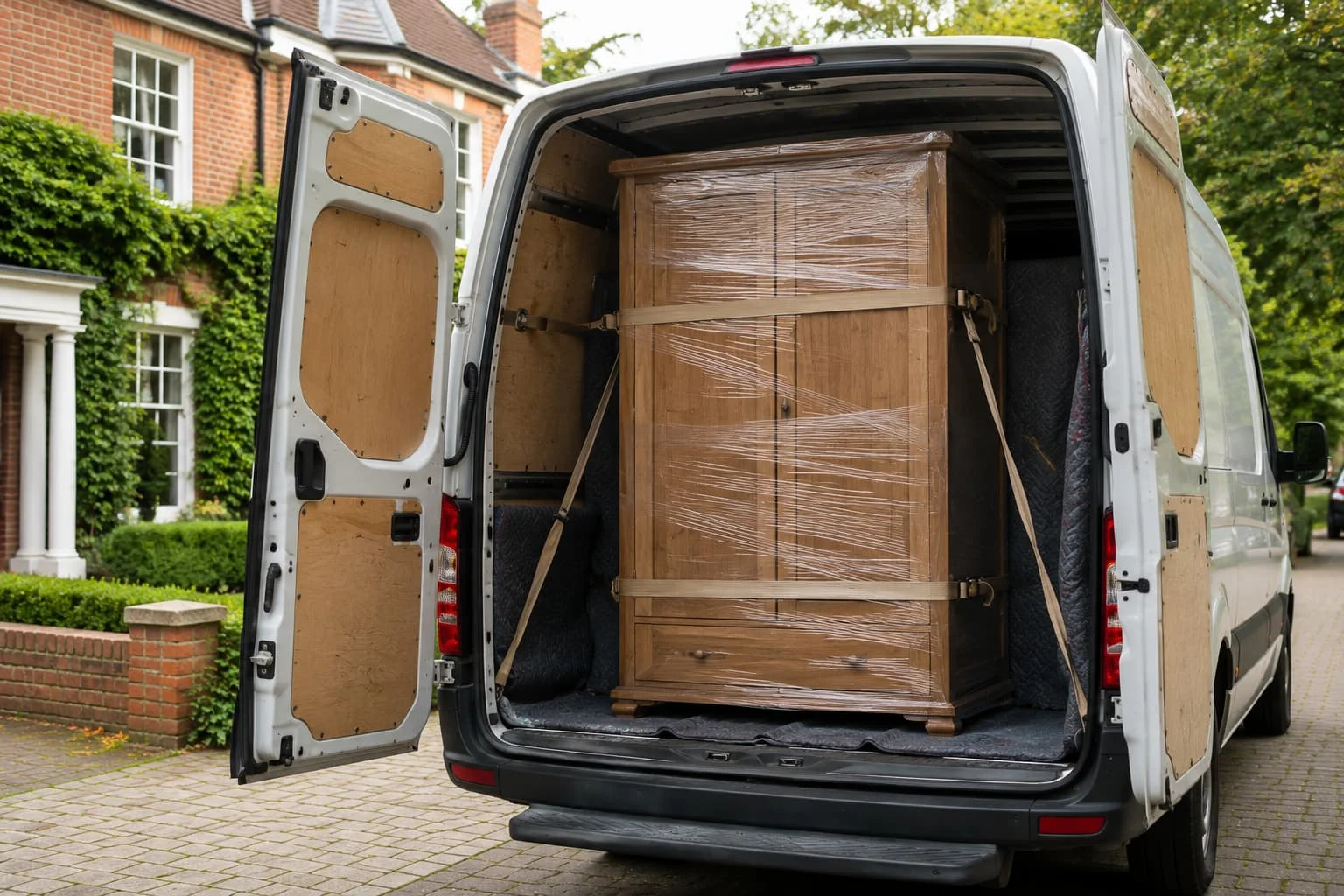
A wardrobe travels best loaded upright and strapped against the van's side wall rather than laid flat on the floor. How to load a wardrobe into a van safely means positioning it first, before lighter items go in around it, so nothing shifts weight against it during transit.
Secure furniture during transport with ratchet straps at two points, high and low, to stop the unit rocking on corners and braking. Transport a wardrobe upright whenever the vehicle height allows it, since horizontal transport puts uneven pressure across joints that were never designed to bear weight sideways.
Most standard wardrobes come through a careful move like this without a mark. Older, mirrored or built-in units carry extra risks that are worth handling differently.
Special Cases: Antique, Vintage, and Fitted Wardrobes
Not every wardrobe follows the same rules as a standard flat-pack unit. Age, materials and fixings change what's safe to do.
What Makes These Wardrobes Different
An antique or solid wood wardrobe needs extra padding at the joints, since age often means the original glue and dowels have weakened even if the piece looks solid. How to move an antique wardrobe safely means testing every joint by hand before lifting, not assuming decades-old joinery will hold under load the way it did when new. Transporting vintage furniture safely also means avoiding dismantling wherever possible, since old screws and fittings strip easily and original finishes rarely survive repeated handling of loose panels.
Fitted and built-in wardrobes aren't designed to be moved as a single unit at all, since they're fixed to the wall and floor of the room they were installed in. Fitted wardrobe removal typically means the carcass stays behind and only the doors, shelving and any freestanding sections travel to the new property. Built-in wardrobe moving considerations should factor in whether the unit has genuine resale or reuse value, since in most cases the practical route is replacing it rather than relocating it.
Signs a wardrobe needs specialist handling include:
- Visible joint gaps. Loose dowels or glue lines that have separated with age.
- Non-standard dimensions. Antique units wider or taller than modern doorway norms.
- Integrated lighting or electrics. Fitted wardrobes wired into the room's power supply.
- Irreplaceable finishes. French polish or veneer that can't be touched up if chipped.
Whether the wardrobe is flat-pack or a fitted unit, the same question comes up at some point: is this worth doing yourself, or is it time to book help?
Professional Help: Making the Right Call
Booking a two-person team makes sense the moment a wardrobe needs to travel further than a single room, involves stairs, or exceeds what two people can carry safely on their own. Hiring movers for one item is a common decision for exactly this reason, since needing to move a wardrobe just once rarely justifies a full house-move service but still needs proper handling.
A professional wardrobe delivery service should include a two-person crew, protective wrapping, and placement in the actual room the wardrobe is going to, not just the front door. We built Exact Delivery around exactly that standard. Our quotes start from £55 for a wardrobe, priced by postcode with no hourly charges or hidden add-ons.
A professional furniture removal quote through Exact Delivery takes a couple of minutes with just two postcodes, and the two person moving team and the process to book a courier for furniture both work the same way regardless of how far the wardrobe is travelling.
Frequently asked questions
Do I need to dismantle a wardrobe to move it?
Not always. If the diagonal measurement clears every doorway and stairwell turn on the route, a tilt and turn carry keeps the wardrobe fully assembled. Dismantling only becomes necessary when the unit is wider than the tightest access point or too heavy to control on a turn.
How much does it cost to move a wardrobe in the UK?
A professional two-person delivery through Exact Delivery starts from £55, which is often close to or cheaper than the DIY total once fuel, straps and blankets are factored in.
Can a wardrobe be moved up narrow stairs without damage?
Yes, provided it's tilted onto its narrower edge rather than carried flat, and the team pauses at every landing to reset grip. Most staircase damage happens when a wardrobe is forced through in one continuous motion instead of adjusted stage by stage.
How many people do I need to move a wardrobe?
Two, for almost any wardrobe beyond a small, empty flat-pack unit. A single carrier can't control tipping on stairs or through doorways, which is where most transit damage happens.
Is it cheaper to dismantle a wardrobe before a house move?
Usually yes for flat-pack units, since a smaller, lighter load reduces both handling time and the risk of a costly repair. Solid wood and antique pieces are the exception, where dismantling itself carries more risk than moving the unit whole.
Can I book a courier for just one wardrobe?
Yes. Single-item bookings are the standard format for a wardrobe delivery service, and there's no minimum load requirement to get a quote.
A removal firm quotes a whole-house day rate for one item; a parcel courier says it's too big. Here's the gap a postcode-to-postcode furniture courier fills, and what it costs.
Moving a piece that can't be replaced calls for more than a van and a strong pair of arms. What makes antique transport different, what it costs, and how to choose a courier you can trust.
Furniture delivery starts from £25 for a small box shipment and rises to around £55 for a wardrobe. Here is what shapes a quote, and what a fair price looks like before you book.